Best Practices for Effective Pull Requests
12 March, 2026
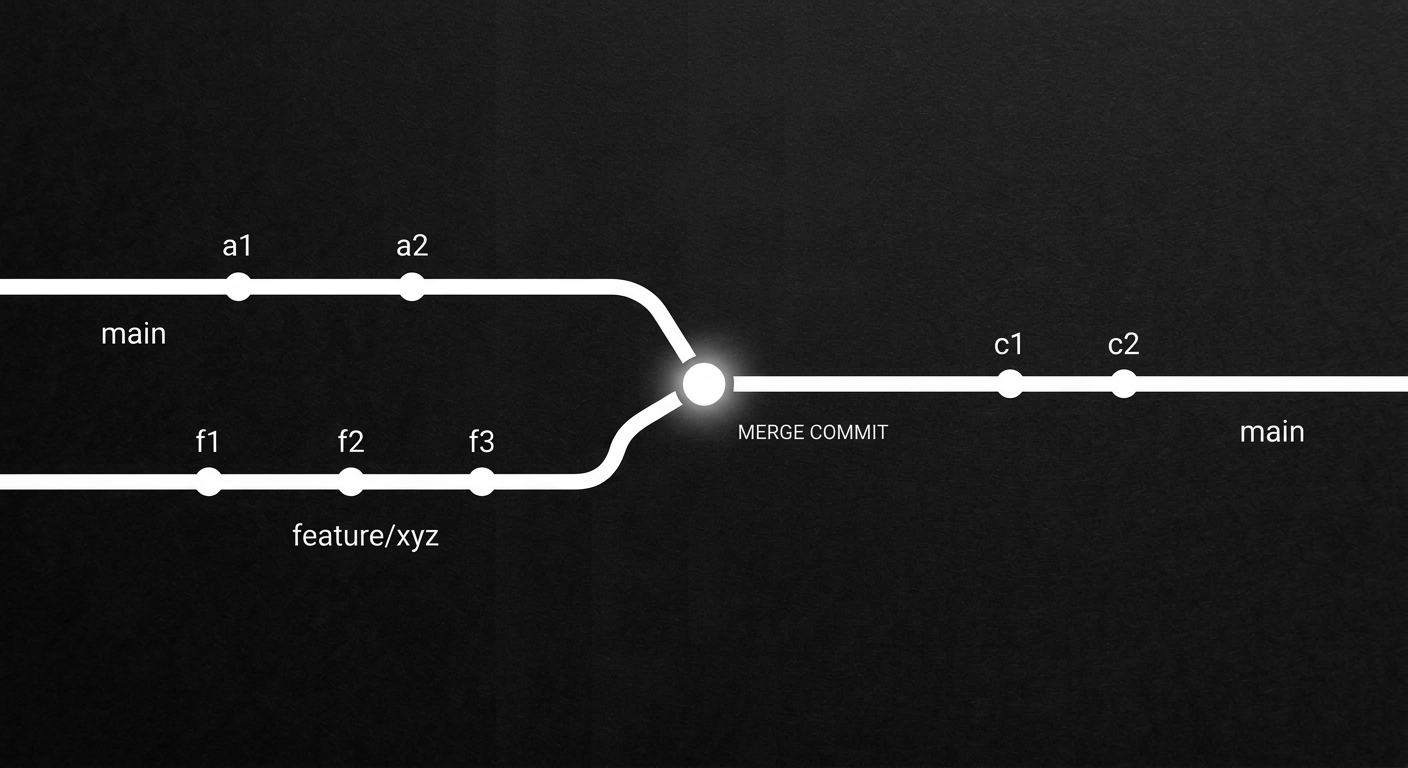
When Linus Torvalds invented Git in 2005 to manage the thousands of code contributions for the Linux kernel, he did not include a clear and easy-to-use workflow for reviewing code. Only years later, when GitHub popularized modern pull requests (PRs) in 2008, did it provide developers with a new way of reviewing code, making use of git pull to merge changes into the main branch.
In a paper by Pirouzkhah et al., a pull request is defined as a submitted code contribution that undergoes review by other developers and is merged into the source code after approval. To determine the value of an effective PR description, they analyzed a large amount of GitHub pull requests and interviewed developers on the topic of PRs. The paper states that writing a PR description is a context-sensitive task, not just a simple repetitive one. They observe that a PR serves two roles: descriptive, explaining the purpose, code, and testing; and also as a way to shape the reviewing process, setting expectations for both parties. The use of PR templates can help in this. A PR template is a predefined structure stored in the repository that is automatically inserted into the PR description upon creation. Employing these templates has been shown to improve the review process, correlating with fewer duplicate PRs, shorter review times, and fewer review comments, especially when the templates are well-structured and show essential elements like description and test information.
According to a paper by Jiang et al, PRs help reviewers make informed decisions, however descriptions are not always clearly written. They argue that reviewer modification has often been neglected in previous studies, despite being key information for improving description quality, but also for speeding up a time-consuming process. During the research, thousands of PRs are analyzed to understand what makes a high-quality description. The research formulates best practices and shares a set of 12 practices, including practices such as stating the motivation, linking the related issue and explaining the trade-offs. Based on 40 valid survey responses regarding the difficulty and importance of these practices, the following results were obtained:
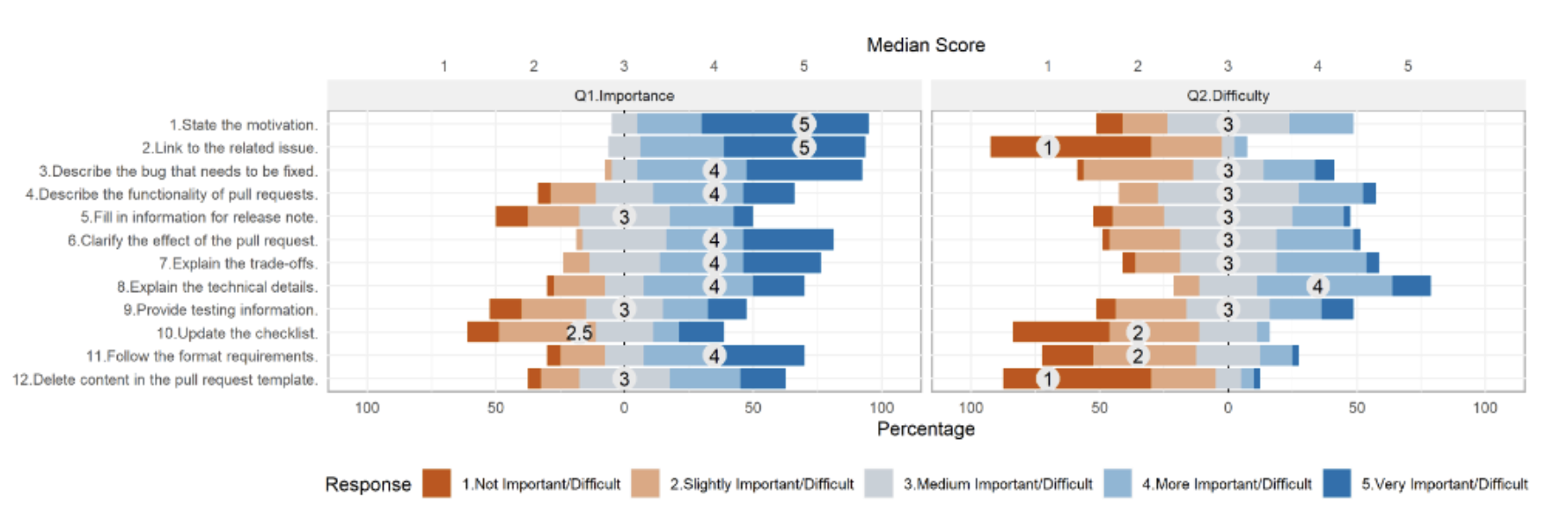
Interestingly, the data suggests that administrative tasks like linking issues are seen as important and easy. However, the more complex tasks, like explaining how and why code was written, are recognized as both important and more challenging to perform. The low importance assigned to updating checklists might indicate they are viewed as bureaucratic formalities rather than a meaningful part of the code review process.
Ultimately, pull requests have changed code review drastically, but its success still heavily depends on well-written descriptions. They act as a communication tool able to set expectations between reviewer and reviewee. While mundane administrative tasks are easy wins for developers, the real value in a description lies in explaining how and why a change is made. It takes more time and effort to write a good description, but investing the time to explain the reasoning behind the code leads to shorter review cycles and fewer revisions.